Categories Spa Covers

Why a Custom-Fit Hot Tub Cover Matters

Choosing the right hot tub cover is about much more than picking a color. A properly fitted cover helps reduce heat loss, keeps dirt and debris out of the spa, protects the water from direct sunlight, and makes the hot tub easier to maintain.

For spa owners in Southern California, a cover also needs to handle strong sun, warm temperatures, coastal air in some areas, and year-round outdoor exposure. A well-made custom-fit cover is built for the actual size and shape of the spa instead of forcing a one-size-fits-all solution.

Why a Proper Fit Matters

A hot tub cover should fit the spa correctly and sit where it was designed to rest. A cover that is too small, too large, or made with the wrong corner radius may leave gaps around the edge. Those gaps can allow heat to escape and make it easier for leaves, dust, and other debris to enter the spa.

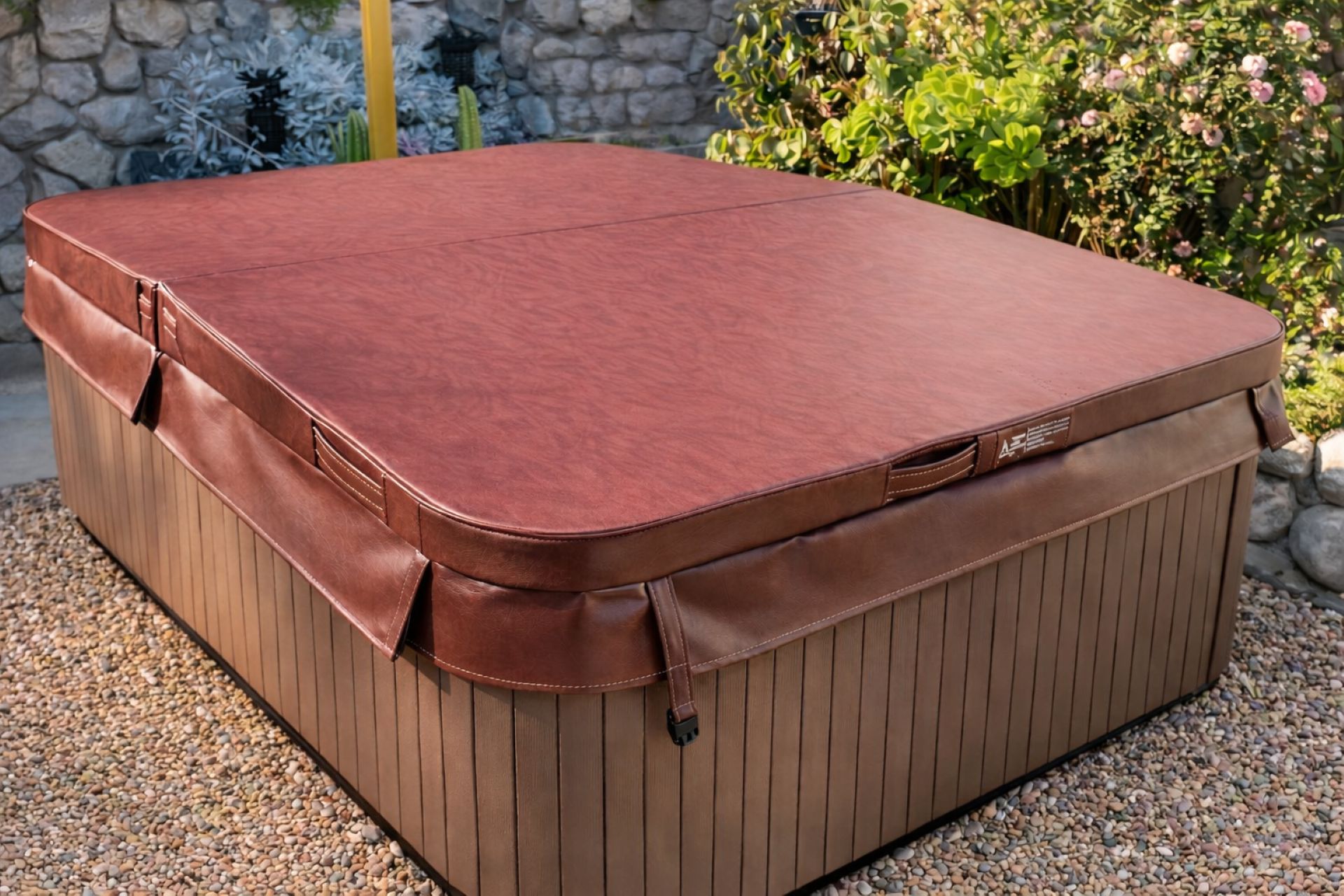
A custom-fit cover is made from the measurements of the spa. For most portable and above-ground hot tubs, this includes the overall length and width, corner radius or cut corners, skirt length, fold direction, and the location of any special features that may affect the fit.

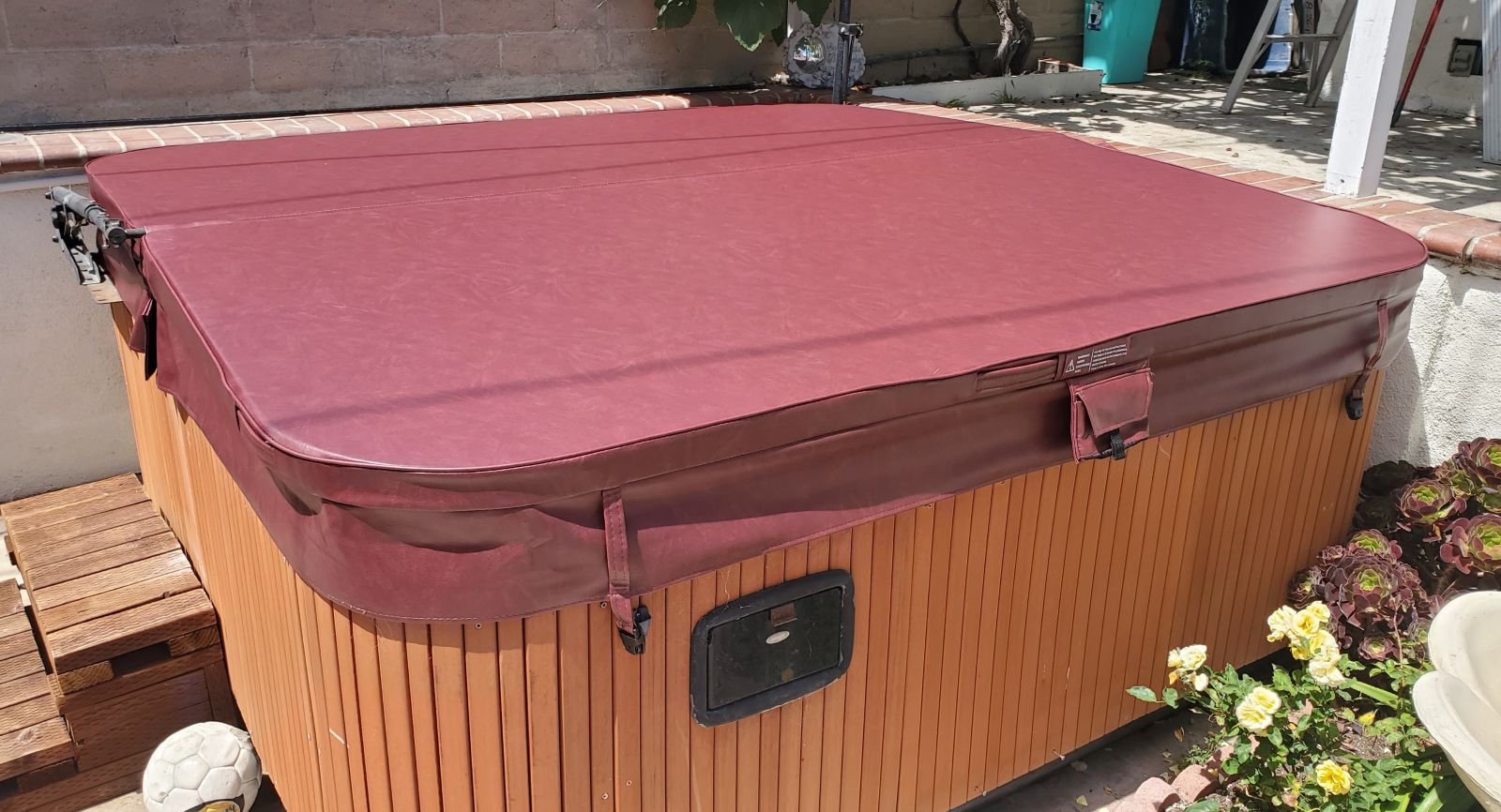
For more information about available foam options, colors, and construction choices, visit our Portable Spa Covers page.

Reduce Heat Loss and Energy Use

One of the most important jobs of a hot tub cover is helping retain heat. Warm water naturally loses heat to the surrounding air, especially overnight and during cooler weather. A properly fitted insulated cover helps reduce that heat loss so the heater does not have to work as often to maintain the desired water temperature.

Even in Southern California, nighttime temperatures can be much cooler than daytime temperatures. Coastal areas can also experience cool nights and marine air, while inland areas may have much greater temperature swings. The right foam density and cover construction should be selected based on how the spa is used and the local climate.

Keep Dirt and Debris Out of the Spa

A well-fitting spa cover helps keep leaves, dust, insects, and other outdoor debris out of the water. This can reduce cleaning time and help the filtration system do its job more effectively.

This is especially useful in areas with wind, trees, landscaping, or dry conditions where dust and debris can quickly collect around an uncovered spa.

Choose the Right Foam for the Spa and Climate

Not every spa owner needs the same level of foam density or insulation. The right choice depends on the size of the spa, how often it is heated, where it is located, and whether people are likely to place weight on the cover.

For many portable spas in Southern California, a Deluxe 1.5 lb foam core provides a good balance of strength, insulation, and manageable weight. Heavier 2.0 lb foam is available for customers who want additional strength, and thicker Super Foam construction is available when greater insulation or strength is needed.

The goal is not to automatically sell the heaviest cover available. The better approach is to choose the construction that fits the spa, climate, and way the cover will actually be used.

Protect the Cover From Southern California Sun

Southern California sunlight can be hard on outdoor materials. UV exposure, heat, dirt, and neglected maintenance can shorten the life of a spa cover.

A quality exterior material with UV and mildew inhibitors helps the cover withstand outdoor exposure, but regular care still matters. Keeping the cover clean, rinsing away residue, and using an appropriate protectant after cleaning can help maintain the exterior surface.

Safety Depends on the Cover and How It Is Equipped

A hot tub cover should never be described as child-safe simply because it is custom made or has straps. Safety depends on the construction of the cover and how it is secured.

For qualifying spa covers up to 96 inches, covers equipped with the proper construction and four locking tie-downs can meet ASTM F1346-91 safety requirements. Oversized and swim spa covers are built differently and should not automatically be described as ASTM child-safety covers.

The locking tie-downs should be used as intended whenever child access is a concern.

Custom Covers for Different Spa Shapes

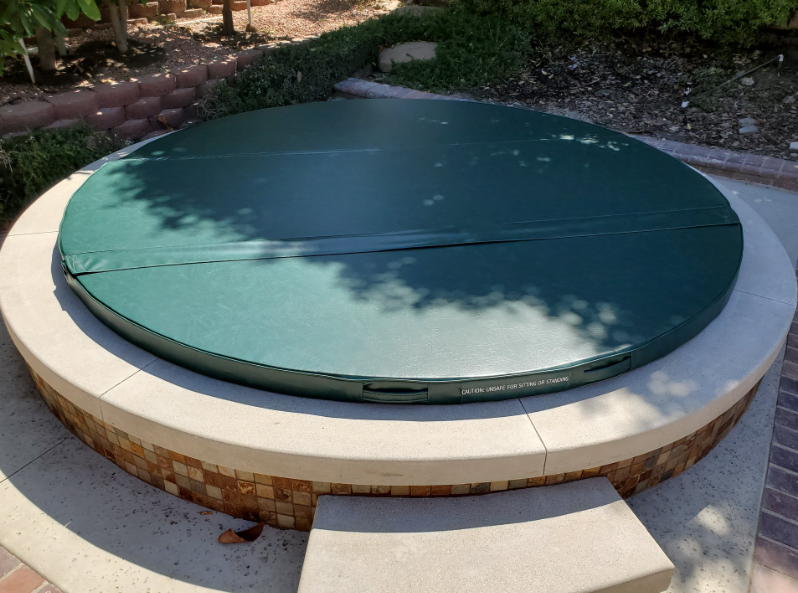
Many portable hot tubs are square or rectangular with rounded corners, but not every spa has a standard shape. Covers can also be made for spas with cut corners, octagonal designs, unusual radiuses, and other special configurations.

More complicated shapes may require additional measurements or a template. Getting the shape right is just as important as getting the length and width right.

A Better Cover Is About More Than Appearance

Color is important, especially when the spa is part of a finished backyard, patio, or outdoor living area. But the most important parts of a spa cover are the fit, foam core, vapor barrier, reinforcement, hinge design, skirt, and tie-down placement.

A good-looking cover that does not fit correctly or is built with the wrong materials will not perform as well as a cover designed around the actual spa.

How Long Should a Hot Tub Cover Last?

A typical spa cover often lasts about 4 to 6 years. With proper maintenance and good water chemistry, some covers may last another year or two beyond that range.

Actual lifespan depends on many factors, including sunlight, climate, chemical exposure, water chemistry, foam density, vapor barrier condition, and how the cover is handled.

No honest company can guarantee that simply choosing a custom cover will make it last 7 to 10 years. Proper construction and maintenance both matter.

Frequently Asked Questions

Can a custom hot tub cover reduce heat loss?

Yes. A properly fitted insulated cover helps reduce heat loss from the water and can reduce how often the heater needs to run.

What foam density should I choose?

That depends on the spa, climate, and how the cover will be used. Many Southern California spa owners choose Deluxe 1.5 lb foam, while 2.0 lb Heavy Duty foam is available when additional strength is desired.

Can a cover be made for an unusual spa shape?

Yes. Covers can be made for many unusual shapes. Some require detailed measurements, while free-form or irregular designs may require a template.

Are all custom spa covers child-safe?

No. A custom cover is not automatically child-safe. Qualifying covers up to 96 inches can meet ASTM F1346-91 requirements when they are properly constructed and equipped with four locking tie-downs.

How long does it take to have a custom cover made?

Our normal production time is approximately 3 to 4 weeks.

Need Help Choosing the Right Cover?

Spa Covers Etc. has been helping customers with replacement and custom spa covers since 1997. We offer covers for portable hot tubs, built-in spas, unusual shapes, oversized spas, and swim spas.

Not sure which foam density, shape, or measurement method is right for your spa?

Call Chris at (949) 496-2883. We can help you determine what you need before your cover goes into production.

We’ve got your spa covered!
Categories Spa Covers

Are You Wasting Money on the Wrong Hot Tub Cover?

Choosing the wrong hot tub cover can cost more than you might think. An improperly fitted or poorly constructed cover can allow heat to escape, increase energy use, wear out prematurely, and make your spa harder to maintain.

The right cover is not necessarily the cheapest cover or the heaviest cover available. It should fit the spa correctly and use the right foam density, construction, and features for the spa, climate, and way the cover will be used.

For spa owners in Southern California, factors such as strong sunlight, warm inland temperatures, cooler coastal nights, and year-round outdoor exposure should all be considered when choosing a replacement cover.

Why Choosing the Right Hot Tub Cover Matters

A hot tub cover has several important jobs. It helps retain heat, keeps leaves and debris out of the water, protects the spa when it is not being used, and can provide an important safety feature when the correct type of cover and locking tie-downs are used.

A cover that does not fit correctly or is built with the wrong materials may not perform as expected. Problems can include:

  • Heat escaping through gaps around the spa
  • A cover that is unnecessarily heavy
  • Foam that is not strong enough for the intended use
  • Premature damage from sun and weather exposure
  • Water absorption caused by a damaged vapor barrier
  • A cover shape or corner radius that does not match the spa

Choosing the right cover from the beginning can help avoid these problems.

Start With the Correct Fit

One of the most important parts of ordering a replacement hot tub cover is getting the measurements right.

For most portable and above-ground spas, the cover is made using the outside dimensions of the spa shell. The corner radius or cut-corner dimensions also matter. Depending on the spa, other details may include skirt length, fold direction, speakers, control panels, handrails, or other features that affect how the cover fits.

A cover does not need to be excessively tight. It needs to be made to the correct dimensions and shape so it rests properly on the spa and provides good coverage around the perimeter.

Learn more about our available construction options on the Portable Spa Covers page.

Choose the Right Foam Density

Many customers assume that the heaviest or most expensive foam option is automatically the best choice. That is not always true.

The best foam density depends on the climate, size of the spa, how the spa is used, and whether additional strength is needed.

For many portable spas in the mild Southern California climate, Deluxe 1.5 lb foam provides a good combination of strength, insulation, and manageable weight. Heavy Duty 2.0 lb foam is available when greater strength is desired, while thicker Super Foam construction provides additional insulation and strength for customers who need it.

The right goal is to choose the cover that fits the actual situation rather than paying for an upgrade that provides little practical benefit.

Do Not Judge a Cover by Price Alone

Price is important, but two spa covers that look similar in a photograph may be built very differently.

Important differences can include:

  • Foam density and thickness
  • Vapor barrier construction
  • Internal reinforcement
  • Exterior material quality
  • UV and mildew resistance
  • Hinge construction
  • Skirt design
  • Tie-down construction and placement

A low price is not a bargain if the cover does not fit correctly or fails prematurely. At the same time, buying the most expensive option available is not always necessary. The best value comes from matching the cover construction to the spa and how it will be used.

Consider the Southern California Climate

Southern California does not have one single climate. A spa near the coast may experience mild temperatures, cool nights, marine air, and humidity. Inland locations can experience much stronger heat and larger temperature swings.

Strong sunlight is one of the biggest concerns throughout the region. A spa cover should use an exterior material designed for outdoor exposure with protection against UV damage and mildew.

Regular cleaning and proper care also matter. Even a well-made cover will age faster when it is neglected, exposed to excessive spa chemicals, or allowed to remain dirty for long periods.

Watch for Signs That Your Current Cover Needs Replacement

A spa cover does not need to completely collapse before it should be replaced. Some common signs of deterioration include:

  • The cover has become noticeably heavier
  • The foam is sagging or holding water
  • The exterior material is badly cracked or deteriorated
  • The cover no longer sits properly on the spa
  • The hinge or seams are separating
  • Heat loss appears to have increased

A heavy cover is often a sign that moisture has entered the foam core. Once the foam becomes substantially waterlogged, replacing the cover is usually more practical than trying to repair it.

Safety Requires the Right Cover and Proper Tie-Downs

Not every custom spa cover should automatically be described as child-safe. Safety depends on the size, construction, and proper use of the cover.

Qualifying spa covers up to 96 inches can meet ASTM F1346-91 safety requirements when properly constructed and equipped with four locking tie-downs. Those locks should be used as intended whenever child access is a concern.

Oversized and swim spa covers are built differently and should not automatically be considered ASTM child-safety covers.

How Long Should a Hot Tub Cover Last?

A typical spa cover often lasts approximately 4 to 6 years. With regular maintenance, proper water chemistry, and favorable conditions, some covers may last another year or two.

The actual lifespan depends on factors including:

  • Sun and weather exposure
  • Water chemistry
  • Chemical vapor exposure
  • Maintenance and cleaning
  • Foam and vapor barrier condition
  • How the cover is opened, closed, and handled

Claims that every expensive or custom-made cover will automatically last 7 to 10 years should be treated carefully. Quality matters, but environment and maintenance matter too.

Frequently Asked Questions

What is the most important part of choosing a replacement hot tub cover?

Correct fit is the starting point. The length, width, corner radius, skirt length, and any special features that affect the cover should be considered before the cover is built.

Do I need the heaviest foam available?

Not necessarily. Foam density should be chosen based on the climate, spa size, intended use, and desired strength. Many Southern California spa owners do well with Deluxe 1.5 lb foam, while heavier options are available when additional strength or insulation is needed.

Why is my old hot tub cover getting heavy?

A cover often becomes heavy when moisture gets through the vapor barrier and enters the foam core. Once the foam becomes substantially waterlogged, replacement is usually the practical solution.

Are all replacement spa covers child-safe?

No. Qualifying covers up to 96 inches can meet ASTM F1346-91 requirements when properly constructed and equipped with four locking tie-downs. Not every replacement cover or oversized cover qualifies.

How long does a custom replacement cover take to make?

Our normal production time is approximately 3 to 4 weeks.

Need Help Choosing the Right Hot Tub Cover?

The right hot tub cover should match the size and shape of your spa, the local climate, and the way you actually use the spa. Paying for features you do not need can waste money, but choosing a cover based only on the lowest price can also become expensive in the long run.

Spa Covers Etc. has been helping customers choose replacement and custom spa covers since 1997. We offer multiple foam densities, approximately 14 color choices, and covers for portable spas, built-in spas, unusual shapes, oversized spas, and swim spas.

For help choosing the right cover, call Chris at (949) 496-2883.

We’ve got your spa covered!

Categories Spa Covers

How a Hot Tub Cover Saves Energy in Dry Climates

Hot tubs in dry, sunny climates face a different set of challenges than spas in cooler or more humid areas.

Low humidity can increase evaporation, while constant sun exposure can accelerate wear on the exterior material if the cover is not cleaned and protected properly.

A properly fitted hot tub cover helps reduce unnecessary heat loss, reduce evaporation, and protect the spa when it is not in use.

Why Dry Climates Affect Hot Tubs Differently

In dry climates, water can evaporate more quickly from the surface of the spa.

If the spa is left uncovered, or if the cover is old, damaged, waterlogged, or poorly fitted, both water loss and heat loss can increase.

That can lead to:

  • More frequent heater run time
  • More water refilling
  • More chemical adjustments
  • More debris entering the water
  • More sun exposure on the spa surface

A properly constructed cover acts as a barrier between the warm spa water and the outside air.

How a Hot Tub Cover Helps Reduce Heat Loss

Hot water naturally loses heat to the surrounding air.

A fitted insulated cover helps slow that heat loss by covering the water surface and reducing exposure to outside air.

Heat loss can increase when:

  • The cover no longer sits evenly on the spa
  • There are gaps around the perimeter
  • The foam core is damaged
  • The cover is sagging
  • The vapor barrier has failed and moisture has entered the foam

When a cover is no longer doing its job, the heater may need to run more often to maintain the desired water temperature.

Why Evaporation Matters in Dry Climates

Evaporation is one of the main reasons a spa loses both water and heat.

In dry air, evaporation can happen faster, especially when the spa is uncovered or the cover does not fit properly.

A properly fitted cover can help:

  • Reduce evaporation
  • Reduce water refilling
  • Help maintain more stable water chemistry
  • Limit unnecessary heat loss from the water surface

Less evaporation can also make routine maintenance easier because the spa is not losing as much water between uses.

Sun Exposure Can Shorten Cover Life

Dry climates often come with strong sunlight and high UV exposure.

Over time, sun exposure can dry out and weaken the exterior material if the cover is neglected.

Common signs of sun damage include:

  • Fading
  • Cracking
  • Brittle material
  • Splitting near seams or hinges
  • Dry or rough texture

Regular cleaning and the use of a recommended UV protectant can help protect the exterior material and extend the useful life of the cover.

Foam Density and Climate

The right foam density depends on the spa, climate, and how the cover will be used.

For many portable spas in Southern California, Deluxe 1.5 lb foam provides a good balance of insulation, strength, and manageable weight.

Heavy Duty 2.0 lb foam is available when additional strength is desired, especially for in-ground spas, colder climates, or situations where the cover needs extra structural support.

Super Foam 2.0 lb construction with a 5-inch to 3-inch taper is available for covers up to 96 inches when higher insulation is desired.

The best choice is not always the thickest or most expensive option. The goal is to match the cover construction to the spa and how it is used.

Proper Fit Is Just as Important as Insulation

Even a well-insulated cover will not perform properly if it does not fit the spa.

A cover that is too small can leave gaps around the edges. A cover that is too large may not sit correctly on the spa shell.

For portable spas, the cover is normally built to fit the outside dimensions of the spa shell.

For built-in plaster or Gunite spas, the cover usually needs to be larger than the water opening so it can rest securely on the surrounding coping.

The correct measuring method depends on how the spa is installed.

When a New Cover Can Help Lower Operating Costs

A new cover can help reduce unnecessary heat loss when the old cover is damaged, waterlogged, sagging, cracked, or no longer fitting correctly.

That may reduce how often the heater needs to run to maintain the set temperature.

The actual savings depend on:

  • Condition of the old cover
  • Water temperature
  • Climate
  • Wind exposure
  • Electricity or gas rates
  • How often the spa is used
  • How well the new cover fits

No honest company should promise a specific dollar amount of savings without knowing those details.

Dry Climate Maintenance Matters

In dry, sunny areas, cover maintenance is especially important.

To help protect the cover:

  • Clean the exterior regularly with mild soap and water
  • Rinse thoroughly after cleaning
  • Allow the cover to dry
  • Apply a recommended UV protectant
  • Keep water chemistry balanced
  • Avoid letting pets or people stand on the cover

Based on our experience in Southern California, a typical spa cover often lasts about 4 to 6 years.

With favorable conditions, some covers may last another 1 to 2 years. Covers that are cleaned, protected, and maintained according to our recommended maintenance plan may last even longer.

Signs Your Cover Is Losing Performance

In a dry climate, a worn cover may still look usable from a distance even when it is no longer performing well.

Consider replacement if the cover:

  • Feels much heavier than before
  • Has cracked or brittle exterior material
  • Is sagging in the middle
  • No longer sits evenly on the spa
  • Leaves gaps around the perimeter
  • Has separating seams or hinge damage
  • Allows the spa to cool faster than it used to

Replacing a failing cover can improve usability, reduce unnecessary heat loss, and better protect the spa between uses.

Choosing the Right Cover for a Dry Climate

The right hot tub cover should match the spa, the installation, and the climate.

For dry, sunny areas, the most important factors are:

  • Proper fit
  • Correct foam density
  • Good vapor barrier protection
  • Durable exterior material
  • Proper maintenance
  • Accurate measurements

A properly fitted hot tub cover is an important part of controlling heat loss, evaporation, and sun exposure in dry climates.

Learn more about available options on our Portable Spa Covers page.

Need Help Choosing a Hot Tub Cover?

Spa Covers Etc. has been helping customers with custom spa covers since 1997.

For help choosing the right cover for your spa and climate, call Chris at (949) 496-2883.

We’ve got your spa covered!

Categories Spa Covers

How Insulation Impacts Round Spa Cover Performance

If you own a round spa, the performance of your cover depends on insulation quality and proper fit — not just shape.

A well-constructed round spa cover helps retain heat, reduce evaporation, and protect your spa from weather damage. But performance comes from materials and construction, not whether the spa is round or square.


Why Insulation Is the Real Factor

Heat rises, and most heat loss occurs at the surface of the water. A properly insulated spa cover slows that heat transfer.

Important features include:

  • 4” to 2” tapered foam cores

  • 2 lb density insulation

  • Vapor barriers to prevent water absorption

  • Tight perimeter fit

These factors matter more than the spa’s shape.


Does Shape Affect Performance?

Round and square spa covers can perform equally well when properly built.

The difference comes down to:

  • Accurate measurements

  • Proper taper

  • Foam density

  • Construction quality

A poorly constructed cover — round or square — will lose heat.

A well-built cover — round or square — will perform efficiently.


Construction Quality Prevents Common Problems

Over time, lower-quality covers can:

  • Become waterlogged

  • Sag in the center

  • Lose insulating value

  • Develop cracks in vinyl

Proper foam density and vapor barriers help prevent these issues.


When to Replace a Round Spa Cover

Replacement may be necessary if:

  • The cover feels heavy

  • The center sags

  • Heat loss increases

  • Vinyl shows cracking

Performance declines gradually, so many owners don’t notice the energy loss right away.


Final Thoughts

Round spa covers are not inherently better or worse than square covers. What matters is insulation thickness, foam density, vapor protection, and fit.

A properly constructed insulated cover improves efficiency, reduces evaporation, and extends the life of your spa — regardless of shape.

Categories Spa Covers

How Heavy Duty Spa Covers Protect Your Spa Through Every Season

A Heavy Duty spa cover is built for customers who want additional strength, reliable insulation, and year-round performance in changing outdoor conditions.

Weather affects spa covers differently throughout the year. Strong sun, heat, rain, wind, falling debris, cold nights, and seasonal temperature changes all place different demands on a cover.

Heavy Duty 2.0 lb foam adds structural strength and somewhat higher insulation value, while the exterior material, vapor barrier, reinforcement, fit, and maintenance all play important roles in how the cover performs over time.

Summer Sun and Heat

Strong sunlight and high temperatures can be hard on any outdoor spa cover.

The exterior material takes the direct exposure from UV rays, heat, dust, and weather. Over time, neglected material can fade, dry out, crack, or become brittle.

Heavy Duty foam does not make the exterior material immune to sun damage, but the stronger foam core can provide additional structural support while the cover is exposed year-round.

Regular cleaning and proper care are still important. Keeping the cover clean and using an appropriate protectant can help maintain the exterior surface.

Rain and Moisture

A properly fitted spa cover helps keep rainwater and debris out of the spa while the tapered foam design helps water drain from the top surface.

For covers up to 96 inches, our Heavy Duty construction uses 2.0 lb foam with a 4-inch to 2-inch taper.

The vapor barrier around the foam core is also critical. Once moisture gets through a damaged or failed vapor barrier, the foam can begin absorbing water and the cover may become unusually heavy.

Heavy Duty foam adds strength, but no foam core can compensate for a badly damaged vapor barrier indefinitely.

Wind, Leaves, and Outdoor Debris

Outdoor spas are constantly exposed to leaves, dust, insects, and windblown debris.

A properly fitted cover helps keep those materials out of the water, which can reduce cleaning time and help the filtration system work more effectively.

During windy conditions, locking tie-downs should be used as intended to help keep the cover secured to the spa.

The cover fit, skirt, hinge design, and tie-down placement all matter. Heavy Duty foam adds strength, but proper fit and secure tie-downs are what help the cover stay in position.

Cold Weather and Cooler Nights

When the outside air becomes colder, reducing heat loss becomes more important.

A properly fitted insulated cover helps slow heat loss from the spa water and can reduce how often the heater needs to run to maintain the set temperature.

Heavy Duty 2.0 lb foam provides somewhat greater insulation than lighter foam options, making it a sensible choice for many customers who heat their spas year-round in colder climates.

In mild Southern California coastal areas, the insulation difference may be less important than it is in areas with freezing winter temperatures.

Seasonal Temperature Changes

Spa covers expand and contract as outdoor temperatures change.

That repeated movement places stress on the exterior material, seams, hinge area, vapor barrier, and internal structure.

A stronger foam core can help the cover maintain its shape under normal use, but long-term durability still depends on the complete construction of the cover and how well it is maintained.

No single material determines the life of a spa cover. Foam density, vapor barrier condition, reinforcement, exterior material, water chemistry, climate, and handling all matter.

Why Heavy Duty Foam Adds Strength

The main advantage of Heavy Duty 2.0 lb foam is additional structural strength.

This can be useful when:

  • The spa cover is exposed to demanding weather conditions
  • The owner wants a stronger foam core
  • Pets may climb onto the cover
  • The spa is in a busy backyard or entertaining area
  • The cover is used on an in-ground spa at deck level
  • The owner simply wants additional peace of mind

A Heavy Duty cover should still not be used as a walking surface or furniture. Additional strength does not mean the cover should be intentionally stood or sat on.

Heavy Duty for In-Ground Spas

For most built-in plaster, Gunite, and in-ground spas, we strongly recommend Heavy Duty foam.

In-ground covers sit at deck level, which increases the chance that someone may accidentally step on the cover or place weight on it.

Because of that increased risk of accidental pressure, the added strength of 2.0 lb foam is usually worth the upgrade.

Learn more about construction and measuring on our In-Ground Spa Covers page.

Heavy Duty for Portable Spas

Portable spa owners should choose foam density based on climate, use, and desired strength.

For many portable spas in mild Southern California climates, Deluxe 1.5 lb foam provides a good balance of insulation, strength, and manageable weight.

Heavy Duty 2.0 lb foam makes more sense when the customer wants additional strength, lives in a colder climate, heats the spa year-round, or simply prefers the reassurance of a stronger core.

Learn more about available options on our Portable Spa Covers page.

Heavy Duty for Oversized and Swim Spa Covers

For oversized and swim spa covers over 96 inches, Heavy Duty 2.0 lb foam is our standard construction.

Large covers require additional strength because of the greater panel spans and overall dimensions.

Depending on the size of the spa, the cover may require three-piece or four-piece construction or a special center panel layout.

Does a Heavy Duty Cover Last Longer?

A stronger foam core can contribute to better structural performance, but foam density alone does not determine how long a spa cover will last.

Cover lifespan also depends on:

  • Sun and weather exposure
  • Water chemistry
  • Chemical vapor exposure
  • Vapor barrier condition
  • Cleaning and maintenance
  • How the cover is opened and handled

A typical spa cover often lasts approximately 4 to 6 years. With proper maintenance and favorable conditions, some covers may last another year or two.

Is Heavy Duty Right for Every Spa?

No.

For many portable spas in mild climates, Deluxe 1.5 lb foam may provide everything the customer needs.

Heavy Duty is more likely to be worth the upgrade when additional strength, colder weather performance, year-round heating, deck-level placement, or extra peace of mind are important.

Need Help Choosing the Right Foam Density?

The best choice depends on the type of spa, local climate, location, and how the cover will be used.

Spa Covers Etc. has been helping customers choose replacement and custom spa covers since 1997.

For help deciding whether Heavy Duty foam is the right choice for your spa, call Chris at (949) 496-2883.

We’ve got your spa covered!

Categories Spa Covers

Replacement Spa Covers: Choosing the Right Foam and Construction

A replacement spa cover is not just about replacing something old. It is an opportunity to choose the correct insulation level and construction for your specific spa.

Not all covers are built the same. Foam density, taper, and structural reinforcement determine how well your cover insulates and how long it lasts.

Here’s what you should understand before ordering.


Understanding Foam Options

1. Standard Foam (1.0 lb Density)

For most portable spas up to 96″, the standard option includes:

  • 4″–2″ tapered foam

  • 1.0 lb density

  • Reinforced hinge

This configuration provides solid insulation for moderate climates and normal deck-height spas.

Best for:

  • Typical residential use

  • Mild weather conditions

  • Standard above-ground spas


2. Deluxe Foam (1.5 lb Density)

Deluxe foam increases density while maintaining the same 4″–2″ taper.

Benefits:

  • Improved insulation

  • Greater structural strength

  • Longer resistance to sagging

Best for:

  • Slightly colder climates

  • Higher wind exposure

  • Owners who want extra durability without the weight of heavy-duty foam


3. Heavy Duty Foam (2.0 lb Density)

Heavy Duty covers use:

  • 4″–2″ taper

  • 2.0 lb density core

  • Reinforced hinge construction

This is your strongest standard configuration for portable and in-ground spas under 96″.

Best for:

  • Spas exposed to more weather

  • Deck-level installations

  • Owners prioritizing long-term durability


4. Super Foam (5″–3″ Taper, 2.0 lb Density)

Super Foam increases thickness to:

  • 5″–3″ taper

  • 2.0 lb density

This offers maximum insulation and structural rigidity.

Best for:

  • Extreme climates

  • Higher elevation

  • Areas with larger temperature swings


Why Proper Construction Matters

A quality replacement spa cover should include:

  • Sealed vapor barrier to prevent water absorption

  • Marine-grade UV-resistant vinyl

  • Reinforced hinge

  • Proper perimeter sealing

Without these, even high-density foam will fail prematurely.


Safety Considerations

Covers under 96″ can meet ASTM safety standards when properly configured with locking tie-downs.

Oversized covers (over 96″) can include locking straps but are not ASTM-certified due to size limitations.


When Is It Time to Replace?

Replace your spa cover if it is:

  • Waterlogged

  • Sagging

  • Cracked or splitting

  • No longer sealing properly

  • Causing increased heater runtime

A properly built replacement reduces energy cost and protects internal spa components.


Final Thought

Choosing a replacement spa cover is about selecting the correct foam density and construction for your specific environment.

Fit, density, and structural reinforcement matter more than appearance.